Dimensity 9500S vs Snapdragon 8 Gen 5: MediaTek Enters Flagship Showdown
MediaTek introduces Dimensity 9500S and Dimensity 8500, bringing 3nm and 4nm designs, ray tracing, generative AI, and next-gen connectivity to flagship and premium smartphones.
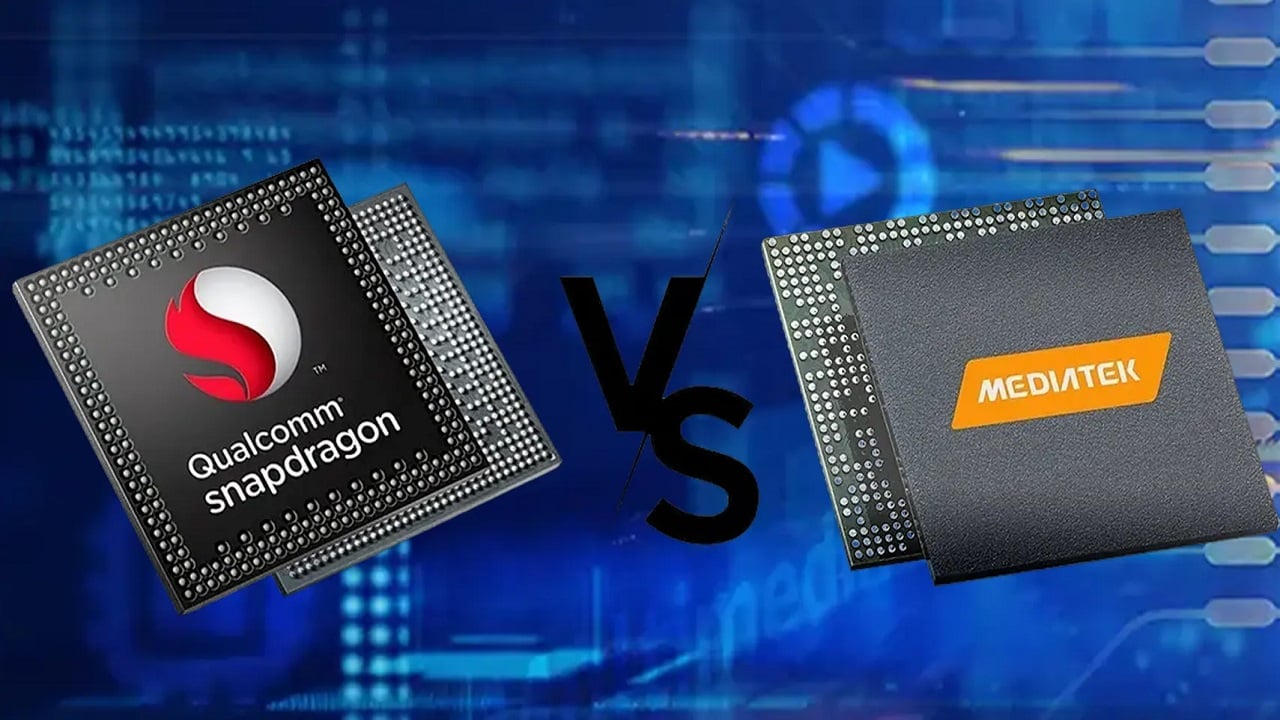
MediaTek has officially announced its latest flagship and premium smartphone platforms, the Dimensity 9500S and Dimensity 8500, signaling a renewed push to challenge Qualcomm’s dominance in the high-end mobile chipset market. The launch, revealed in Hsinchu, Taiwan, focuses on performance, power efficiency, gaming, AI computing, imaging, and next-generation wireless connectivity.
With the Dimensity 9500S positioned directly against Qualcomm’s upcoming Snapdragon 8 Gen 5, MediaTek is making it clear that it no longer wants to be seen as a secondary player in the flagship space. Instead, the company is betting on advanced process technology, an all-big-core CPU strategy, and aggressive gaming and AI features to capture top-tier smartphone designs in 2026.
Dimensity 9500S vs Snapdragon 8 Gen 5: MediaTek Enters Flagship Showdown
Performance Philosophy: Two Different Approaches
The Dimensity 9500S uses an “all-big-core” strategy. Instead of mixing small and large cores, it relies entirely on high-performance cores to reduce scheduling delays and improve responsiveness in demanding workloads like gaming, video editing, and AI processing.
Qualcomm’s Snapdragon 8 Gen 5 is expected to continue its custom-core strategy with Oryon cores, blending high-performance and efficiency cores. This gives Qualcomm strong flexibility for power management, but MediaTek is betting that simpler, high-powered scheduling will give it an edge in real-world smoothness.
Gaming: Ray Tracing Goes Mainstream
Both platforms now treat ray tracing as a standard flagship feature.
-
Dimensity 9500S uses the Immortalis-G925 GPU with ray tracing, full-frame stability, and energy-aware gaming controls.
-
Snapdragon 8 Gen 5 will rely on its next-gen Adreno GPU, traditionally known for strong driver support and gaming optimization.
MediaTek’s advantage is aggressive power-efficiency tuning through MAGT 3.0 and MFRC 3.0, while Qualcomm’s strength remains its long-standing ecosystem support from game developers.
AI: Generative Features at the Core
Both chips are designed for on-device generative AI:
-
Dimensity 9500S focuses on multimodal AI: photo editing, live photo processing, content summarization, and generative reasoning.
-
Snapdragon 8 Gen 5 emphasizes tight integration between CPU, GPU, and Hexagon NPU for large language models and real-time AI tasks.
In practical terms, both will support AI photo editing, voice summarization, and on-device assistants, but MediaTek is positioning its NPU as more optimized for imaging-heavy and creative AI workflows.
Connectivity: Nearly Neck-and-Neck
Both platforms support:
- 5G Release 17
- Multi-carrier aggregation
- AI-based network optimization
- Advanced Wi-Fi and Bluetooth
MediaTek adds some unique branding like Xtra Range 3.0 for indoor Wi-Fi and ultra-long-range Bluetooth, while Qualcomm continues to rely on its widely adopted FastConnect ecosystem.
| Feature | Dimensity 9500S | Snapdragon 8 Gen 5 |
|---|---|---|
| Process Node | TSMC 3nm | TSMC/Samsung 3nm (expected) |
| CPU Design | All Big Core: 1× Cortex-X925 (3.73GHz) + 3× Cortex-X4 + 4× Cortex-A720 | Custom Oryon cores (performance + efficiency mix) |
| CPU Strategy | All-big-core for sustained performance | Hybrid big–little architecture |
| GPU | Immortalis-G925 (12-core) | Adreno next-gen GPU |
| Ray Tracing | Yes (hardware-level) | Yes (advanced Adreno RT) |
| Gaming Tech | MAGT 3.0, MFRC 3.0 | Snapdragon Elite Gaming suite |
| AI Engine | Flagship NPU for GenAI & multimodal AI | Hexagon NPU for GenAI & on-device LLMs |
| Camera ISP | Imagiq ISP, 8K Dolby Vision HDR | Spectra ISP, 8K HDR |
| 5G Modem | Release 17, up to 7Gbps | Release 17, similar peak speeds |
| Wi-Fi | Xtra Range 3.0 | FastConnect 7xxx series |
| Bluetooth Range | Up to 5 km phone-to-phone | Standard long-range BT |
Dimensity 8500: Premium Performance Without Flagship Pricing
While the Dimensity 9500S is aimed at ultra-premium flagships, the Dimensity 8500 is built for premium mid-range smartphones that still demand strong performance, smooth gaming, and modern AI features.
Manufactured on an efficient 4nm process, the Dimensity 8500 uses an All Big Core CPU design with eight Cortex-A725 cores clocked up to 3.4GHz. This setup improves both performance and power efficiency, making everyday tasks like browsing, video streaming, multitasking, and gaming feel faster and more responsive.
The chipset supports LPDDR5X memory at speeds of up to 9600 Mbps, enabling quicker app launches, smoother multitasking, and better overall system responsiveness while keeping energy use under control.
For gaming and graphics, the Dimensity 8500 integrates the Mali-G720 GPU. Compared to its predecessor, peak performance is improved by around 25 percent, while power consumption is reduced by roughly 20 percent. The GPU also supports ray tracing in mainstream mobile games, bringing more realistic lighting and visual depth to titles that previously could only offer basic graphics effects.
With its upgraded gaming engine and smarter task scheduling, phones powered by the Dimensity 8500 should deliver faster game loading, more stable frame rates, and longer battery life during extended play sessions.
On the AI side, the Dimensity 8500 features MediaTek’s 8th-generation NPU. It supports large language models and multimodal models, as well as image generation tools. The chip also enables AI-based ultra-clear telephoto processing and includes an AI semantic engine that intelligently optimizes image frames. This allows phone makers to offer modern AI features in premium devices without the high cost associated with true flagship platforms.
What This Means for the Smartphone Market
MediaTek’s Dimensity 9500S is clearly designed to stand toe-to-toe with Qualcomm’s Snapdragon 8 Gen 5. The similar die size, use of 3nm process technology, and aggressive CPU and GPU designs suggest MediaTek is no longer just competing on price but on raw technological ambition.
For smartphone brands, this creates more leverage in negotiations and more design flexibility. Brands that traditionally relied on Qualcomm now have a serious alternative for premium and flagship devices. For consumers, it means more competition, faster innovation, and potentially better pricing.
Mobile Phone Taxes Portal
Find the PTA Taxes on All Phones on a Single Page using our Taxes Portal.
Note: Mobile phone tax rates and calculations fall under the jurisdiction of the Federal Board of Revenue (FBR), not the Pakistan Telecommunication Authority (PTA).
Explore NowFollow us on Google News!