Freezer Cyberattacks Continue: US Bases, France and Now 10 European Countries Hit Since August
Supermarket freezers in 10 European countries reportedly overheated on Monday, weeks after France and months after US military base stores. Investigators have not said whether the incidents are linked.
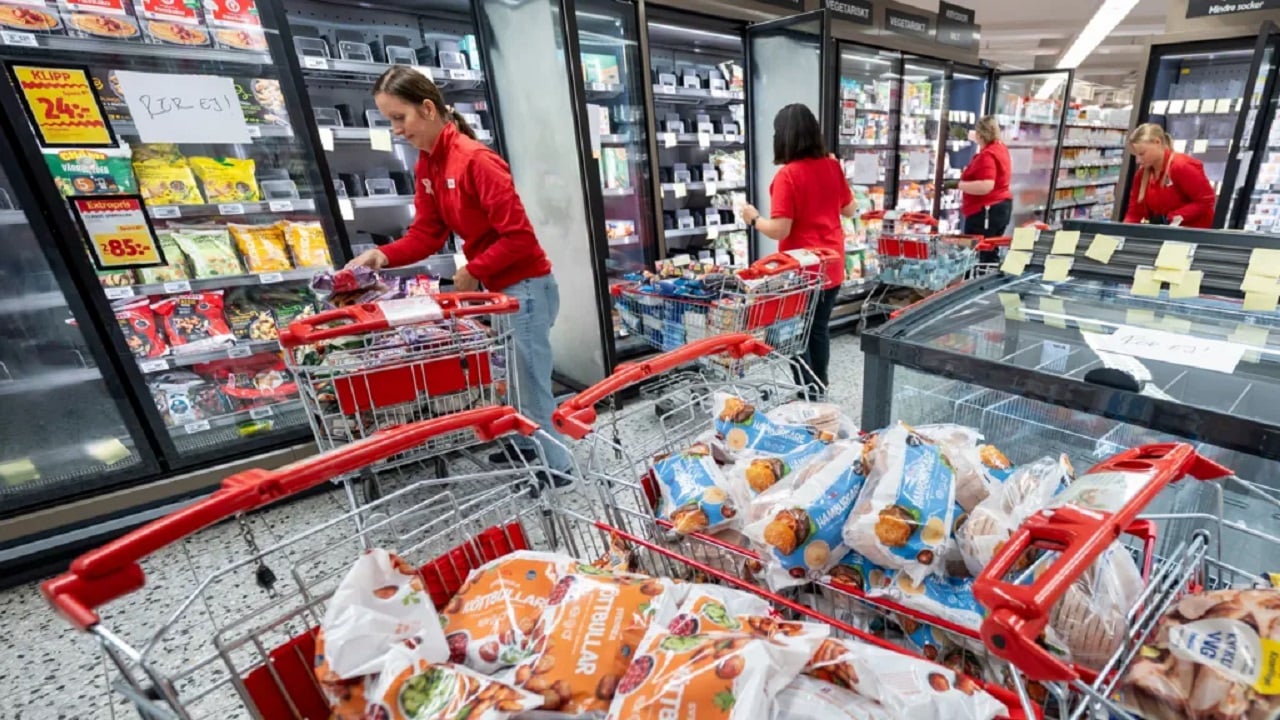
Supermarket freezers in at least 10 European countries began warming on Monday, and some reached a reported 50C. Retailers threw away food, and EU officials warned of a deliberate attempt to disrupt the food supply chain.
These freezer cyberattacks are no longer a single incident. A string of similar failures now stretches from US military base stores in late August to France in October and across Europe this week.
What happened on Monday
Problems were reported in Belgium, Estonia, Finland, Ireland, Italy, Luxembourg, the Netherlands, Portugal, Germany and Sweden. Belgium was among the hardest hit, with dozens of stores reporting refrigeration failures and federal prosecutors opening an investigation.
In Ireland, 13 SuperValu stores were affected. In Germany, the Rewe Büsken supermarket lost refrigeration after a cyber-attack on system provider Danfoss, and its systems were back by Monday afternoon.
No one has claimed responsibility. Authorities have not said how the equipment was accessed or whether the incidents are connected.
Three incidents in under three months
The pattern is easier to see when the events are set side by side.
| US military base stores | French supermarkets | European supermarkets | |
|---|---|---|---|
| When | Late August 2026 | October 2026 | Monday, 2 November 2026 |
| Scale | At least six commissaries | About 700 of 10,000 stores per the finance minister; other counts lower | At least 10 countries |
| Effect | Temperatures raised overnight in at least one case | Units heated to 50C; fires in some stores | Temperatures reported as high as 50C |
| Cost | Not reported | One owner estimated tens of millions of euros | No total estimate yet |
| Equipment | Not established | Many Danfoss controllers, some outdated | Danfoss linked to the German case |
| Status | Pentagon treating as suspected hack | French criminal investigation | Investigations under way in several countries |
The August failures at US bases affected at least six commissaries. Fort Huachuca in Arizona told customers its freezer “went into defrost mode,” and the food was spoilt.
The Pentagon has not publicly confirmed that hackers were responsible. Four officials told Reuters the incidents are being treated as a suspected cyberattack, and military investigators are in contact with their French counterparts.
What links them, and what do not?
Nothing reported so far shows the three events came from the same actor. The US failures came roughly six weeks before France, and officials have only said investigators are talking to each other.
The common thread is equipment. Danfoss, a Danish firm whose controllers ran many of the French units, said many of those devices were obsolete or running outdated firmware. Firmware is the built-in software that tells a device how to operate, and old versions often carry known flaws.
The American link is weaker; it could not be established whether the military commissaries used Danfoss equipment, though records for one shop at a California naval facility list a Danfoss control system. That store was not among the six that failed.
In Belgium, refrigeration firm Sabcobel said units were targeted in an attack that put evaporators into defrost mode. Evaporators remove heat from a freezer, so forcing them to defrost warms the unit from inside.
Why freezers are easy targets
Refrigeration controllers were built as stand-alone boxes, adjusted by a technician on site. Over time, many were connected to the internet so managers could monitor them remotely.
Bill Moore, chief executive of industrial cybersecurity firm Xona Systems, called that shift the root problem. He said the exposure is not unique to cooling systems, but the consequences can be especially serious there.
Italy’s government made a similar point after the Monday attacks. It said the affected businesses mostly used obsolete security systems, with interfaces directly exposed to the internet and weak authentication.
The method is not new. Danfoss has said hackers targeted supermarkets in Russia and Israel in 2022 that used obsolete versions of its controllers. Last December, US federal prosecutors in Los Angeles accused a Ukrainian woman of belonging to a hacker group that knocked out refrigeration at a meatpacking plant in 2024 and ruined more than 2,000 pounds of meat.
How officials are responding
European Commission spokesman Thomas Regnier avoided assigning blame but said, “These are not isolated incidents.” Agriculture Commissioner Christophe Hansen warned of further disruption.
In the UK, the National Cyber Security Centre told retailers to update the software on fridge temperature controls. Its chief executive, Richard Horne, said the problem extends across the whole food supply chain, not just supermarkets.
The overlooked risk: freezers as appliances, not network devices
Many organisations file freezers under facilities, not IT. Nobody patches them, and nobody tracks their firmware. Yet a connected controller is a computer on the network.
Attackers do not need to steal data to cause real damage. Raising a temperature overnight can destroy inventory without triggering any alarm that a security team would see. The first sign may be melted food, not an alert.
The target was chosen because it was ordinary. A machine that keeps food cold sits outside the attention of most security teams, and attacking it creates disruption, cost and public worry without any need to steal anything.
It is worth asking what else sits in that unwatched layer. Building cooling systems, water pumps, elevators, backup generators, hospital storage units and EV chargers are all increasingly connected. This is a list of questions, not confirmed risks, and nothing reported says any of them has been attacked this way.
The practical habit is a plain question about every connected machine: if a stranger controlled this, what would happen? Where the answer is “food spoils” or “a ward loses its medicine fridge”, that machine needs the same care as a server.
If investigators find these incidents are connected, the story shifts from food waste to infrastructure security. If they are separate, it shows how many organisations share the same weakness.
Mobile Phone Taxes Portal
Find the PTA Taxes on All Phones on a Single Page using our Taxes Portal.
Note: Mobile phone tax rates and calculations fall under the jurisdiction of the Federal Board of Revenue (FBR), not the Pakistan Telecommunication Authority (PTA).
Explore NowFollow us on Google News!