Punjab’s AI Oversight Committee Is a Good Start, Here’s What It’s Still Missing
South Asia's first parliamentary AI committee is a genuine first for Pakistan, but a narrow pilot scope, no enforcement power, and a three-day crash course leave real gaps.
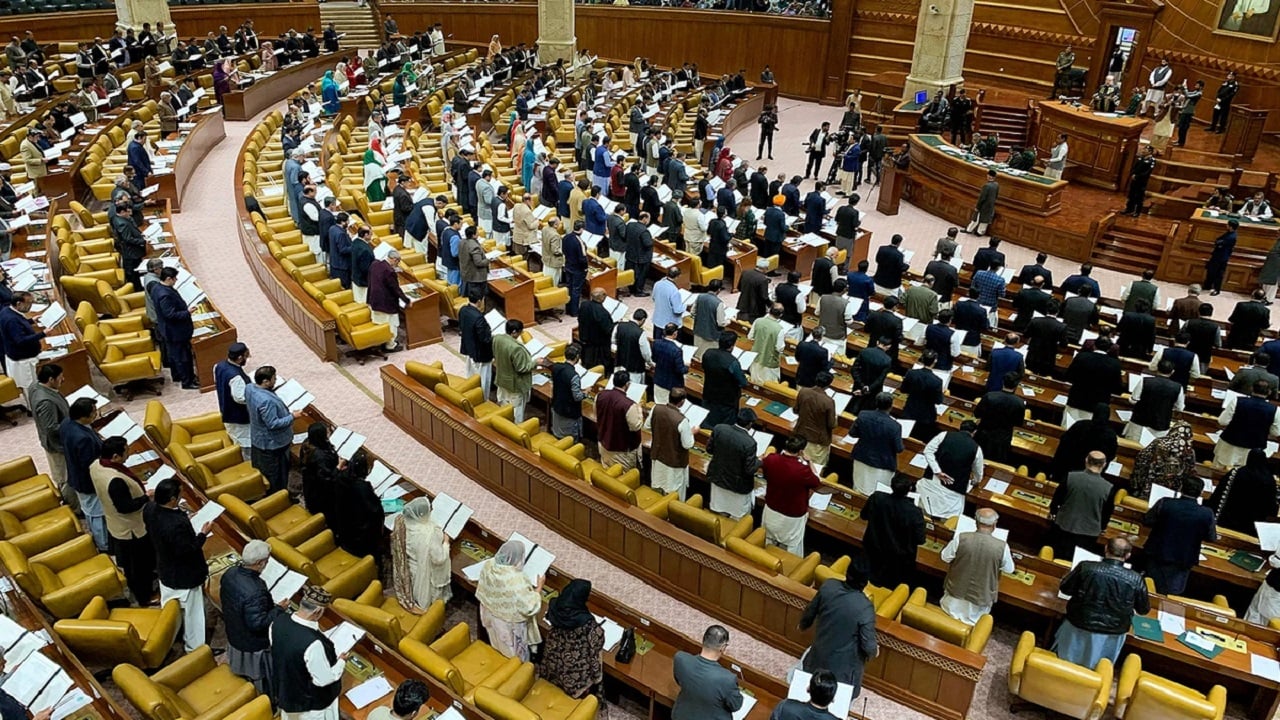
Pakistan just got its first parliamentary body with a dedicated mandate to scrutinize artificial intelligence in government. That’s worth taking seriously and worth interrogating.
Punjab Assembly’s Special Committee No. 13, chaired by Speaker Malik Muhammad Ahmad Khan, held its inaugural meeting on Thursday to examine how AI is used in public services and what safeguards citizens need. No other legislature in the region has anything comparable yet.
The instinct is correct. The execution, as it stands, is where the real questions start.
Why This Is the Right Kind of Step
Government bodies across Pakistan have deployed AI-assisted systems for years without any legislative body formally asking how they work, who checks them, or what happens when they fail.
The committee’s framing gets the fundamentals right. It says it will establish, through evidence, whether a decision was actually made by a human, a fixed rule, statistical scoring, or machine learning rather than assuming AI was involved just because a system is marketed that way. That distinction matters more than it sounds. Much of what’s branded “AI-driven” governance is closer to a spreadsheet with conditional formatting, and conflating the two makes oversight sloppy from the start.
The committee also ran a three-day preparatory workshop with UNDP Pakistan and the UK’s international development organisation before its first sitting, rather than opening hearings cold. Technical grounding before scrutiny is how oversight bodies elsewhere have tried to avoid becoming forums where officials explain jargon to legislators who can’t push back.
A Three-Day Workshop Isn’t Enough to Legislate on This
That grounding, though, is thinner than the task demands.
Three days is enough to introduce terminology, walk through a few case studies, and leave members able to ask informed-sounding questions. It is not enough to understand how a scoring model reaches a welfare decision, why an image-recognition system misreads a license plate, or what separates “statistical scoring” from “machine learning,” the exact distinction the committee says it wants to establish case by case.
That’s the gap: not intent, but dosage. A single workshop produces familiarity. It doesn’t produce the technical literacy needed to read a model’s documentation, question a vendor’s claims, or catch an official’s explanation that doesn’t actually hold up. Without a sustained training track, the risk is familiar: officials present systems in the most favourable technical light, and legislators, working from a three-day primer, lack the grounding to press back on specifics.
Where the Approach Falls Short
The committee’s opening focus is two systems: the Safe Cities Authority’s AI-assisted e-challan network and the Punjab Socio-Economic Registry (PSER), which underpins welfare eligibility.
Both are reasonable starting points. Neither is close to the full picture.
The e-challan system alone shows why scope matters. Public data already puts cancelled incorrect challans above 38,000, with more than 162,000 citizens having used the review facility, not a marginal error rate for a system citizens can’t opt out of, and exactly the kind of evidence a committee like this should be pulling apart. But e-challans and welfare scoring are only two of the AI-linked systems already running in Punjab. Biometric verification, digital land records, and AI-assisted policing tools sit outside the initial programme, with no disclosed timeline for when, or whether, they’ll be added.
A committee examining two systems while a dozen others run untouched is doing something. It shouldn’t be mistaken for comprehensive oversight.
The Bigger Gap: No Teeth, No Register
The more serious limitation isn’t what the committee is looking at; it’s what it can do about what it finds.
Special Committee No. 13 has an inquiry mandate, not, from what’s been disclosed, the power to halt a flawed system, compel an audit, or force a department to change how a model is deployed. It can recommend. Recommendations aren’t consequences.
This is a documented failure mode elsewhere. The UK’s House of Commons Science and Technology Committee ran a comparable inquiry and concluded transparency alone wasn’t enough, recommending a legally enforceable “right to explanation” and a published, government-wide register of high-impact algorithms. Australia went further: its Joint Committee of Public Accounts and Audit called for a standing statutory AI committee, arguing that government AI moves too fast for one-off inquiries to keep pace.
Punjab’s committee currently has neither a public system register nor a mandate beyond this inquiry. Both are solvable, and both were first-order priorities in comparable exercises abroad.
What Else Should Be Done
Publish a public AI register. Citizens should be able to see, in one place, which government systems use automated decision-making, what they decide, and who’s accountable.
Attach enforcement power to findings. A report nobody is bound to act on reads, in hindsight, as a box-ticking exercise. The committee needs statutory authority to compel changes or a clear escalation path to a body that has it.
Make it standing, not one-off. AI deployment in Punjab won’t pause after this inquiry ends. A permanent or rotating mandate keeps oversight continuous rather than episodic.
Widen the pilot set before drawing conclusions. Two systems is a defensible opening. It’s not enough to generalize about how well AI is governed across Punjab’s public sector.
Build sustained technical capacity, not a one-off workshop. One preparatory session should be the start of an ongoing briefing track, recurring technical sessions, independent AI experts as standing advisors, and hands-on walkthroughs of the actual systems under review, not just conceptual briefings.
The Bottomline
Special Committee No. 13 is a genuinely useful institution first, and dismissing it for starting narrow would be unfair; most oversight bodies do. The UK and Australian committees referenced above both began with limited pilots before broadening their mandates.
The question is whether Punjab follows that trajectory toward a public register, enforcement power, and sustained technical depth, or stays a single inquiry that produces a report and fades. The inaugural meeting answered, “Is this the right idea?” Whether its members have the grounding to answer the harder questions is still open, and a three-day workshop won’t settle that on its own.
Mobile Phone Taxes Portal
Find the PTA Taxes on All Phones on a Single Page using our Taxes Portal.
Note: Mobile phone tax rates and calculations fall under the jurisdiction of the Federal Board of Revenue (FBR), not the Pakistan Telecommunication Authority (PTA).
Explore NowFollow us on Google News!
